
 |
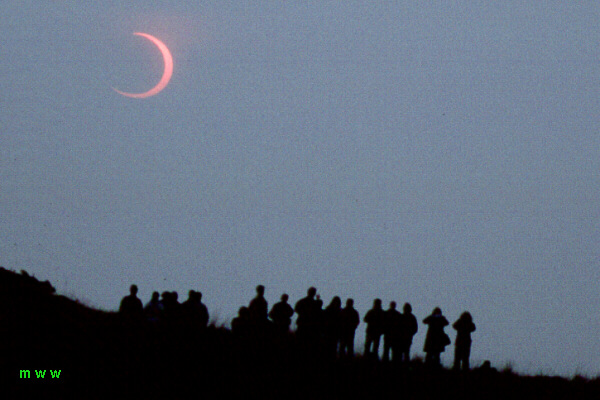
The 2003 annular eclipse photographed from Dornoch in Scotland. More pictures on the 2003 eclipse page here |
||
 More pictures from September 2012 here |
 More pictures from September 2015 here |
Aurora photographs from Bonar Bridge Sutherland and Perthshire | |
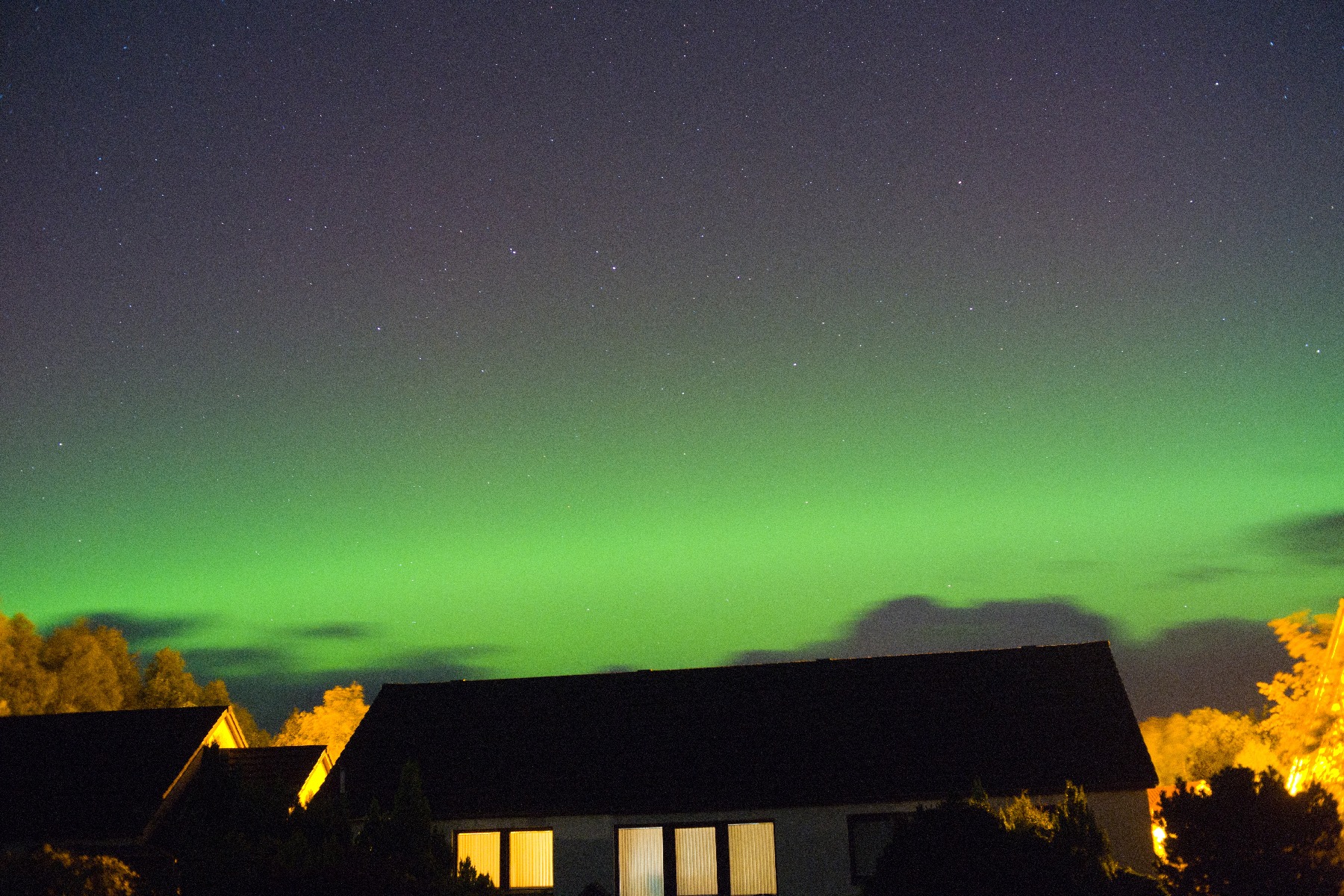 More pictures from September 2023 here |
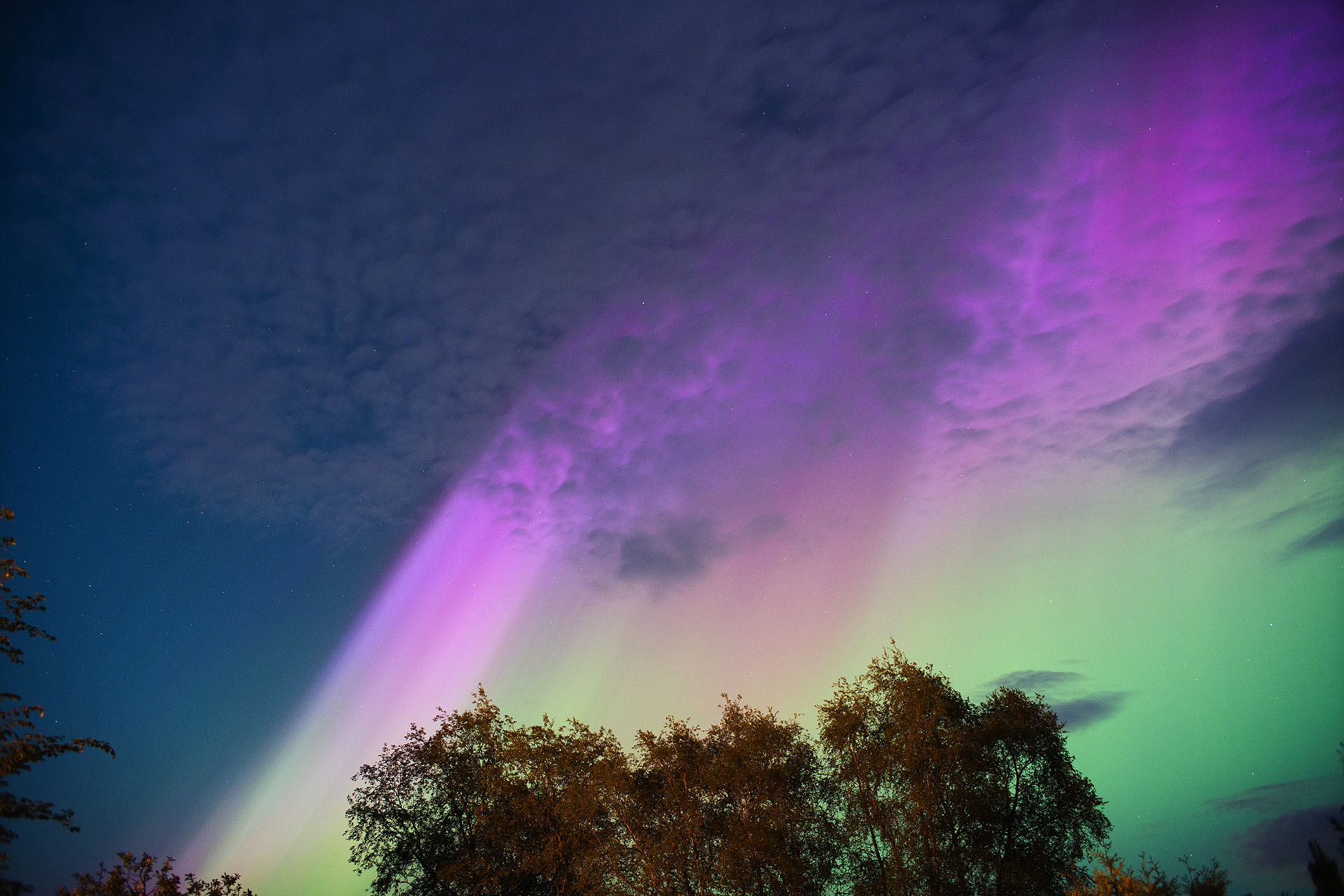 More pictures from May 2024 here |
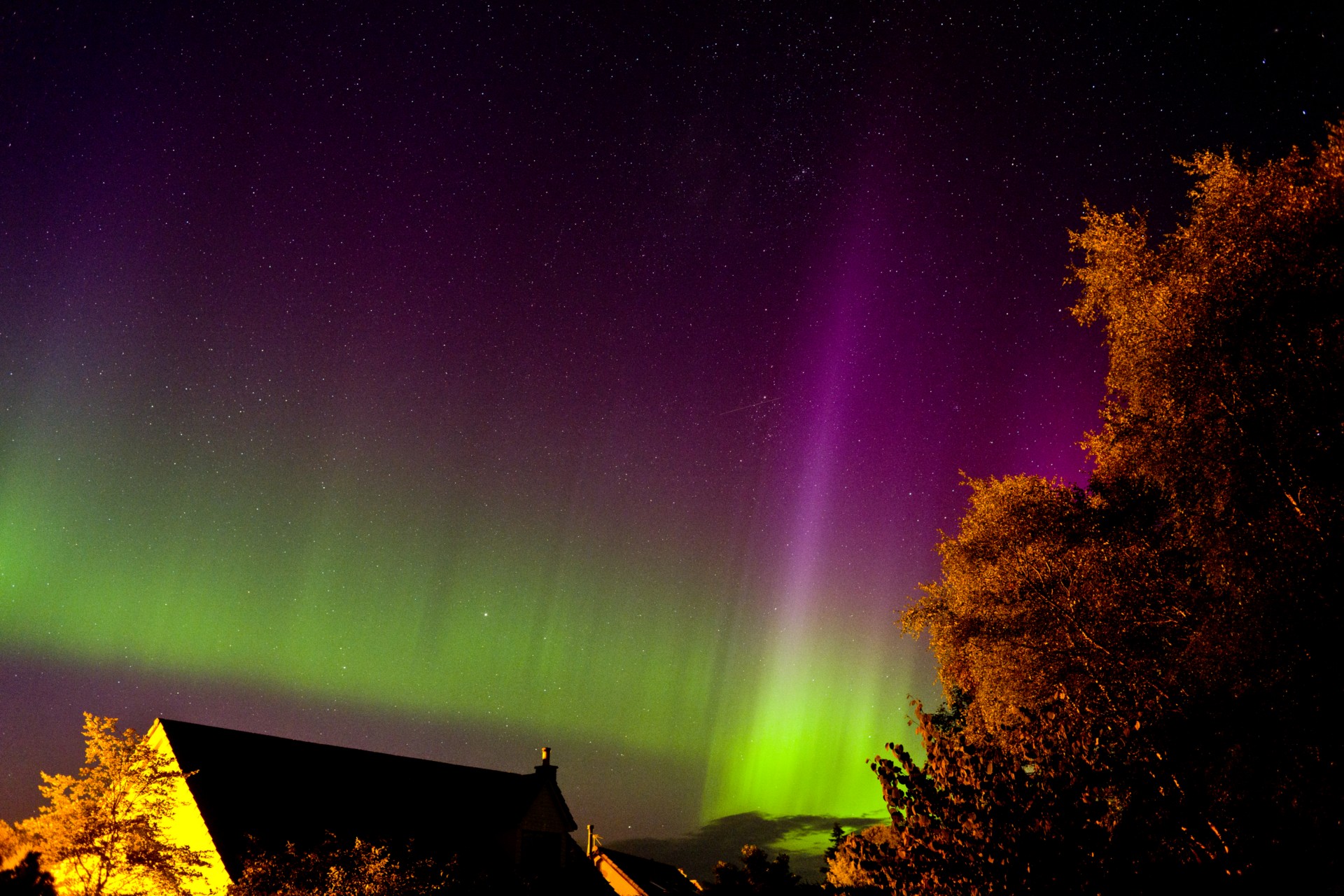 More pictures from August 2024 here |
|
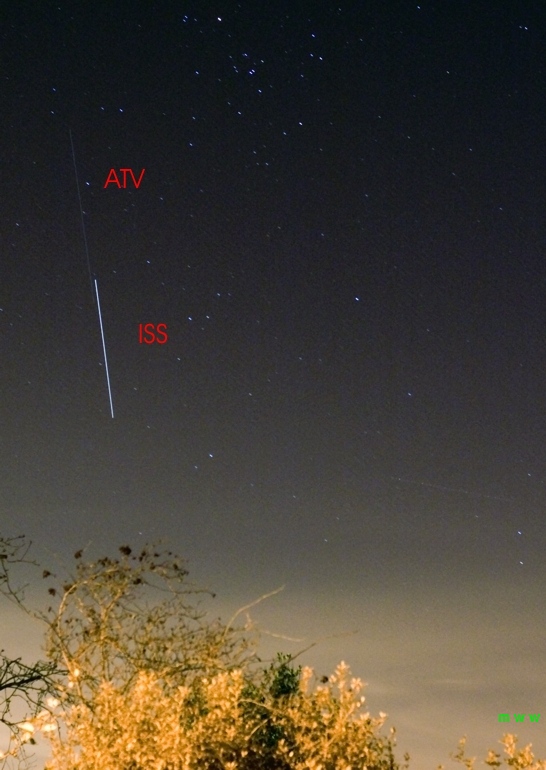 The ISS accompanied by the resupply vehicle, April 2008. |
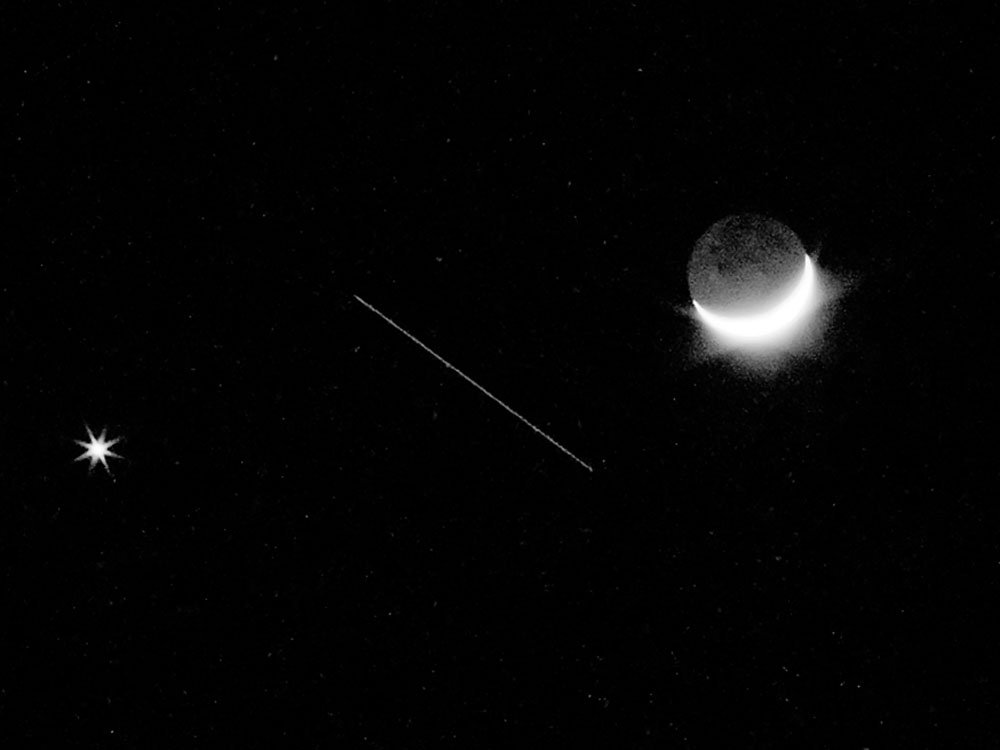 The ISS splits the moon and Venus, 25 Feb 2012. |
The International Space Station (ISS) is the brightest satellite visible, passing overhead at times for anyone between 50°N and south, and reasonably visible withing 60° latitudes. It is usually seen in twilight as it is in the sun when the sun is set for the observer.
In high summer though it can be visible all night for thiose around 50°N as it remains sunlit all night. The website Heavens Above lists ISS passes for your location, and also other artifical satellites and space junk that is visible. |
|
 |
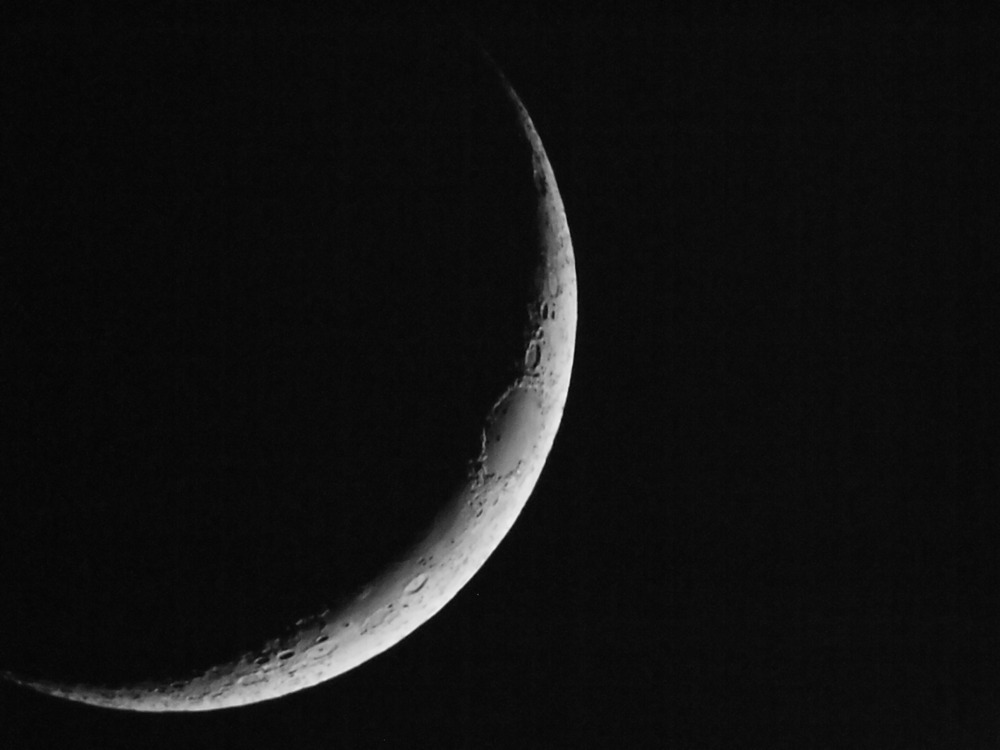 |
The moon, with the rim of Sinus Iridum crater seeming to project out into space due to the sun lighting the edge of it A very thin crescent moon, 30 Dec 2008 |
|
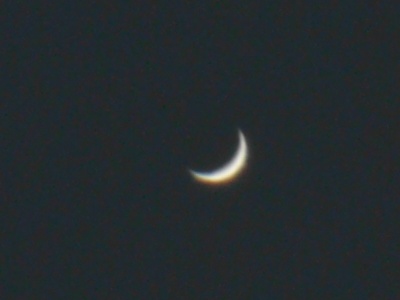 13 May 2012 |
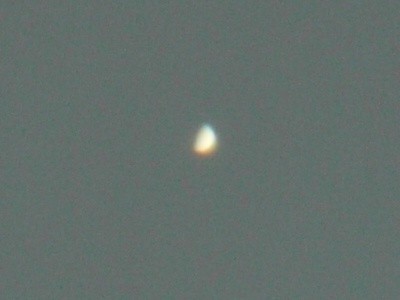 26 Feb 2012 |
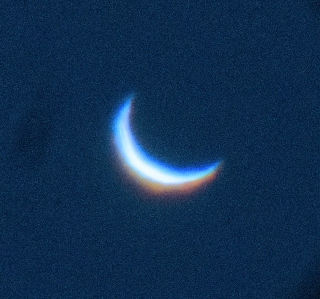 26 Feb 2012 |
Above are all images of Venus, showing not only the phase but also the change in size, while staying at a near constant brightness. All were taken with with an SLR camera on a 1500mm FL telescope and are 1:1 scale pixels |
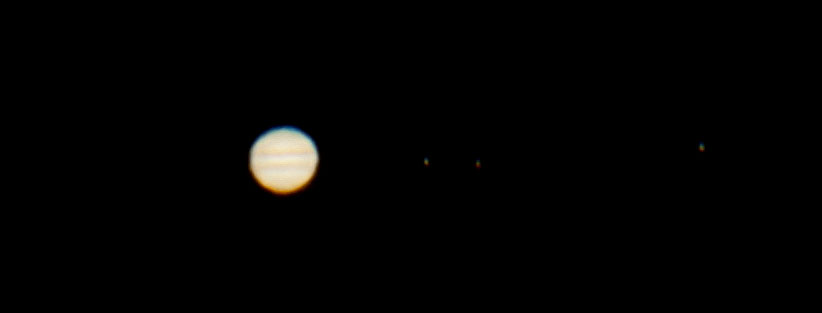 |
Jupiter and its' four moons taken with an SLR camera on a 1500mm FL telescope | ||
 |
 |
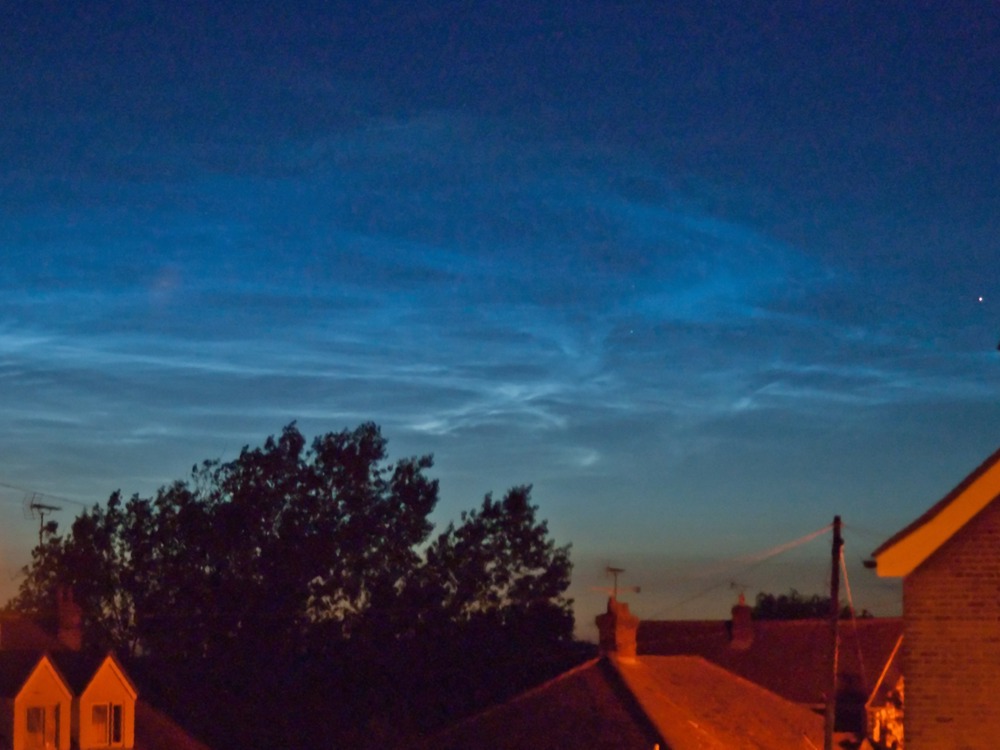 |
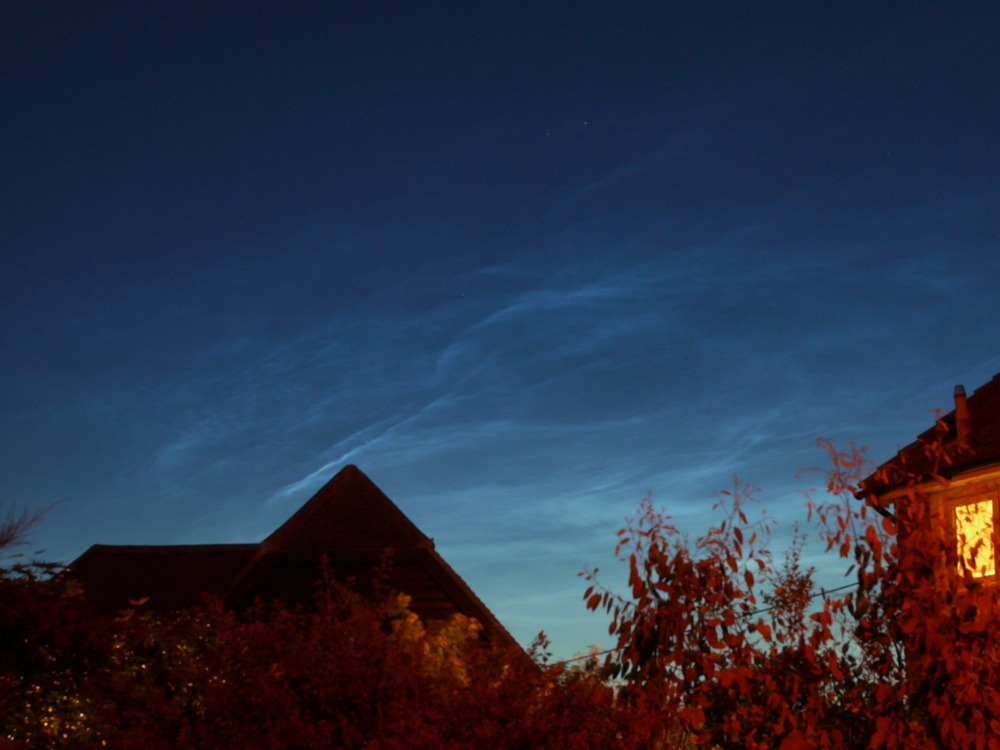
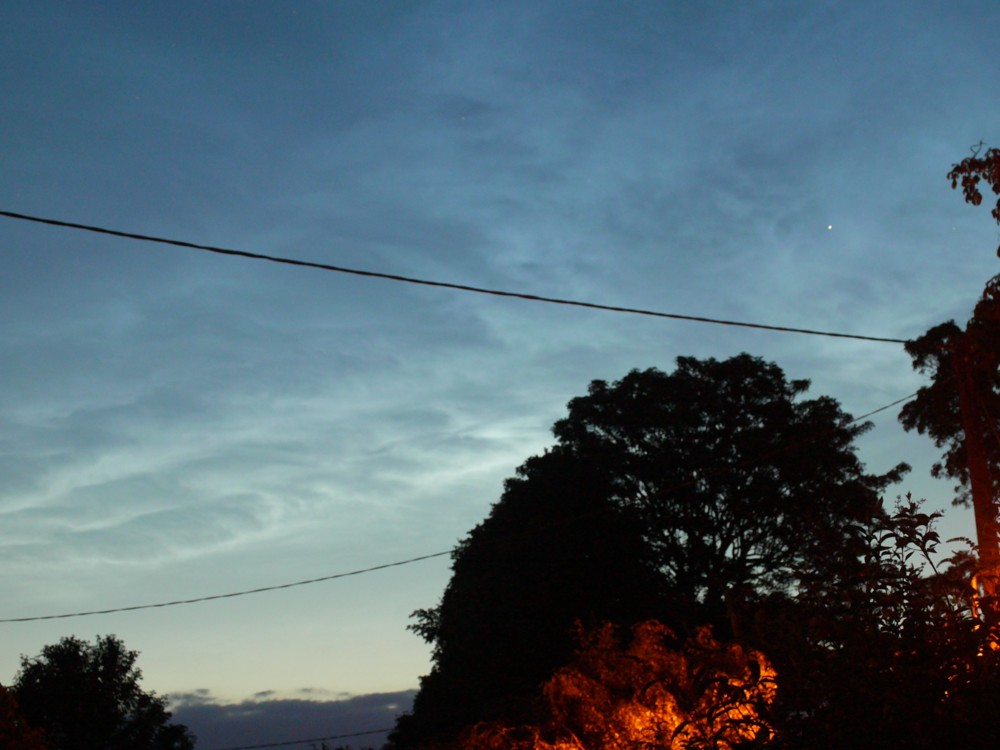
These images are noctilucent clouds, a phenomenon seen in high summer around 50 - 60 latitude where it gets dark on the ground but these clouds, up to 50 miles up, are still sunlit |